Rural voters revolted because they wanted Republicans to help them. GOP didnt deliver
Rural voters revolted because they wanted Republicans to help them. GOP didnt deliver
Rural counties swung more than 15 percentage points toward Democrats in the 2026 midterms. Republicans lost rural strongholds including Iowa, South Carolina, and Kansas, where a Democrat won a U.S. Senate seat for the first time since 1932.
Republicans havent fully lost rural America, but they got one heck of a warning.
Just before the election, a national survey of rural voters found that about 75% rated their local cost of living as fair or poor. Nearly half worried about making their rent or mortgage payments.
FOX NEWS POLL: SQUEEZED BY COSTS, FRUSTRATED VOTERS TURN TO THE DEMOCRATS
The GOP doesn't need another consultant's postmortem to understand what happened. It needs to look at what's happening to the people who feed, build and power this country.
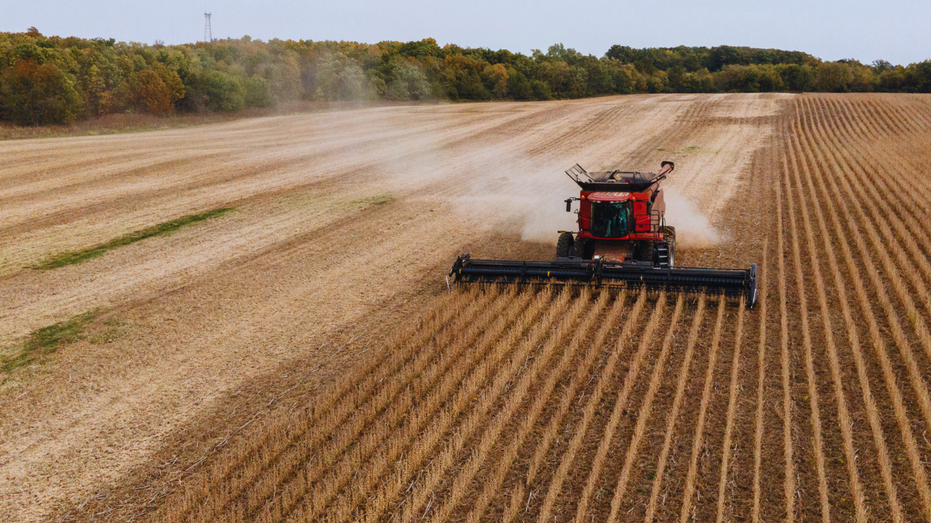
Farm production expenses are projected to reach nearly $493 billion in 2026, up 4.5% in a single year, while inflation-adjusted net farm income is expected to fall 5.5%. In 2012, John Deere's flagship combine cost roughly $454,000, when wheat was $7.77 a bushel. Today, its flagship combine costs over $1.1 million, while wheat is projected at $6.91 a bushel. Meanwhile, family farm bankruptcies jumped 46% in 2025.
BROOKE ROLLINS, MONICA CROWLEY: AMERICAS FAMILY FARMS HAVE KEPT US STRONG FOR 250 YEARS
Ranchers are seeing record cattle prices, but production costs have climbed nearly 30% since 2020.
Ranchers also face a government-enabled meatpacking oligopoly where four companies account for roughly 85% of steer and heifer purchases. Federal regulations make opening independent processing facilities prohibitively expensive, leaving ranchers with fewer buyers and little negotiating power.
CUT THE BULL: THE REAL REASON BEEF COSTS SO MUCH — AND WHAT TRUMP IS TRYING TO DO
Washington's response to agricultural hardship increasingly involves writing checks. are projected to reach $47.4 billion this year. Assistance can keep operations alive, but subsidies don't make equipment cheaper or create new markets. Too often, that money flows straight through farmers to banks, lenders, equipment manufacturers and chemical suppliers. Farmers become little more than conduits for taxpayer dollars, collecting a government check with one hand and handing it over to the industries squeezing them with the other.
Counterintuitively, tariffs have increased costs for imported machinery, steel and agricultural inputs while exposing American exports to retaliation. Farmers are expected to compete globally while the tools of competition get more expensive.
AMERICAN BUSINESSES ARENT ALLOWED TO BUILD. ITS TIME CONGRESS HELPED THEM
The timber industry has fared just as poorly. In 1988, America's national forests produced 12.6 billion board feet of timber. By 2024, that figure had collapsed to just 2.7 billion, a 79% decline. Federal regulations, bureaucratic roadblocks and relentless litigation have strangled timber